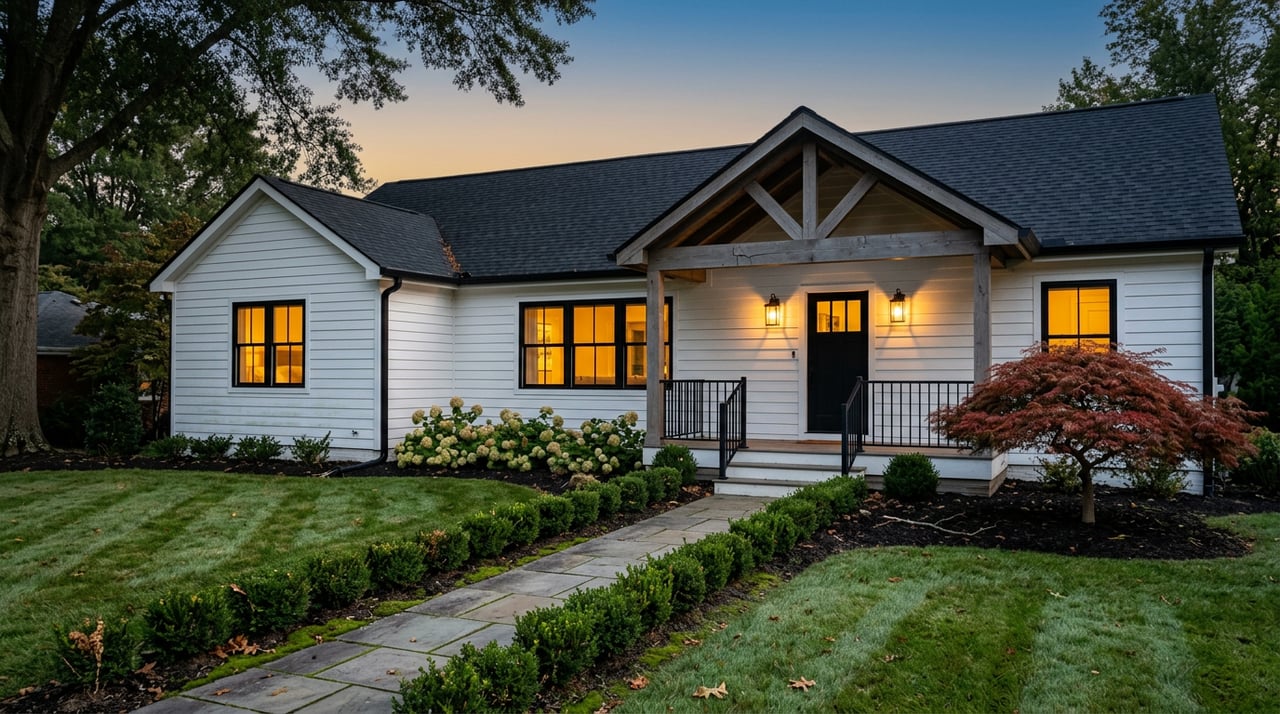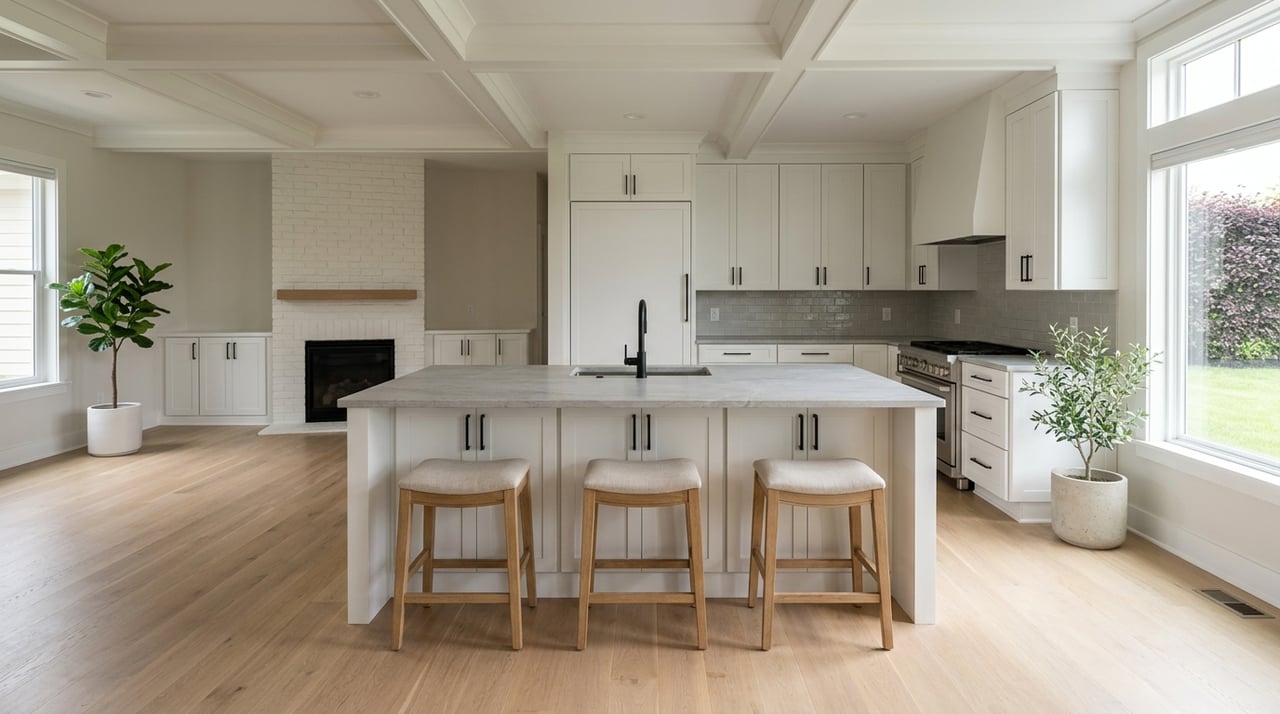
Buying a Fairfax single-family home for the next decade or more is not just about liking the kitchen or the curb appeal. In many parts of Fairfax, the smarter question is whether the house, lot, and layout will still work for you years from now. If you want to make a confident long-term decision, you need to look past surface finishes and focus on age, flexibility, and property rules. Let’s dive in.
Why long-term thinking matters in Fairfax
Fairfax County has a large and established housing stock. As of January 2024, the county counted 437,144 housing units, including 195,578 single-family units, which is about 44.7% of the total. The county is also strongly owner-occupied, with a 68.6% owner-occupied rate, and 87.0% of residents age 1 and older living in the same home one year earlier.
For you as a buyer, that points to a market where stability matters. It also means the right home is often the one that can age well with your needs, not simply the one that feels most polished on day one. In Fairfax, long-term value often comes from sound systems, a workable lot, and realistic renovation potential.
Fairfax homes are often older than they look
One of the biggest facts to know is that Fairfax housing is mature. County demographic reports show that about 79.3% of housing units were built before 1990, and about 89.9% were built before 2000. That matters because a 10-plus-year ownership plan will likely overlap with major repair or replacement cycles.
Even if a home has been updated, you still want to know what was actually improved. A renovated bathroom is nice, but it does not tell you the age of the roof, windows, HVAC, plumbing, or electrical systems. Over a long hold, those details can affect both your budget and your day-to-day comfort.
Year built should shape your questions
When you tour homes in Fairfax, ask about the property’s year-built band and major system history. A home built before 1970 may raise different planning questions than one built in the 1990s or 2000s. The older the home, the more important it becomes to separate cosmetic work from deeper infrastructure work.
This also matters for renovation planning. Fairfax County notes that lead-based paint was prohibited in 1978, and a meaningful share of the county’s housing was built before 1980. If you expect to renovate an older home over time, that is a practical issue to understand early.
Fairfax is not one uniform market
It is easy to talk about “Fairfax” as if every area has the same housing profile, but the county is not uniform. In the county’s 2024 demographic reporting, Mason had 57.5% of units built before 1970, while Sully had 4.5% and Springfield had 7.9%. That is a major difference in likely maintenance patterns, renovation history, and home design.
This is one reason broad advice can fall short. Two detached homes in Fairfax may have similar square footage and price points, but very different long-term ownership implications based on their age, lot conditions, and original construction era. A good buying decision usually comes from understanding the micro-market, not just the ZIP code.
Confirm the correct jurisdiction
Before you rely on county-level assumptions, make sure the property is actually in Fairfax County and not the City of Fairfax. The county’s median-year-built map specifically notes that the City of Fairfax is not included. If you are comparing homes across nearby areas, that distinction matters because research and property rules should match the correct jurisdiction.
Layout matters as much as size
Fairfax detached homes reflect many building eras rather than one standard local style. County historic resources describe a broad architectural range, including postwar suburban housing and later forms such as ranch, split-level, split-foyer, two-massed, and neo-traditional or modern-colonial designs. In practical terms, that means floor plans can vary widely even among homes that look similar from the street.
For a long-term purchase, the key question is not whether a layout has a formal style label. The better question is whether the home’s layout fits how you want to live now and whether it can adapt later. An older split-level may offer useful separation of space, while a ranch may provide easier one-level living, but each comes with different renovation tradeoffs.
Think in terms of function over finish
Try to evaluate how the house works, not just how it photographs. Consider bedroom placement, stair patterns, ceiling heights in lower levels, room flow, and whether past additions feel integrated. A home can be charming and still be awkward for everyday living or difficult to modify.
This is especially important in Fairfax, where many homes have been altered over time. Era-specific floor plan logic often tells you more than updated counters or fresh paint. If you plan to stay for years, function should lead the conversation.
Lot rules can shape your future options
Many buyers focus on house size first and lot size second. In Fairfax, that can be a mistake. The county makes a clear distinction between a lot being legally valid and a lot being buildable.
A buildable lot must satisfy requirements that can include minimum yards, floodplain rules, Chesapeake Bay Preservation Ordinance standards, erosion and sedimentation and stormwater measures, legal access from a public road, and any necessary well or septic permits. So if your long-term plan includes an addition, major outdoor project, or even a rebuild, do not assume the lot will support it just because it appears large enough.
Front-yard and accessory structure limits matter
Fairfax also regulates front-yard parking and accessory structure placement. For single-family detached homes in certain residential districts on lots no larger than 36,000 square feet, surfaced parking in the front yard is capped at 25% in R-1 and R-2 districts and 30% in R-3 and R-4 districts. Accessory structures also generally cannot be placed in a minimum front setback, or in the front yard on smaller lots, and detached structures over 256 square feet require a building permit.
That means your future plans for a wider driveway, extra parking, a detached garage, or a large shed may be more limited than expected. On paper, extra yard space can look flexible. In reality, the rules tied to that parcel may narrow your options.
Renovation potential is a major value test
If you expect a home to serve you for 10 years or more, renovation potential often becomes one of the most important parts of the decision. In Fairfax, the question is not only whether a house needs work. It is whether the house and lot allow the kind of work you may want later.
This is where disciplined planning pays off. A home with average finishes but strong long-term flexibility may be a better fit than a fully updated home with layout or lot constraints that box you in.
Accessory living unit rules offer a useful clue
Fairfax County’s accessory living unit, or ALU, rules can help you understand future flexibility. An ALU may be approved in conjunction with a single-family detached home, but only one ALU is allowed per lot. Internal ALUs may use a basement or cellar if headroom requirements are met, and the unit generally may not exceed 800 square feet or 40% of the principal dwelling, whichever is less, with no more than two bedrooms and required parking.
Detached ALUs are possible only by special permit on lots of at least two acres. Even if you are not planning an ALU today, these rules are a reminder that future adaptability is governed by specific standards, not broad assumptions.
Do not assume rezoning is simple
If your long-term vision depends on changing the property’s zoning or density, be careful. Fairfax County states that rezoning is a formal zoning map amendment process with staff review and public hearings, and only the Board of Supervisors can approve it. In other words, a hoped-for zoning change should not be treated as a guaranteed path.
For most buyers, the safest approach is to buy based on what the property can reasonably support today under current rules. Future upside is a bonus, not the foundation of the decision.
A smart Fairfax home checklist
When you are comparing detached homes for a long hold, these are the questions worth asking early:
- Is the home in Fairfax County or the City of Fairfax?
- What is the home’s year-built range?
- Which major systems have been replaced, and when?
- Does the existing layout work for your likely needs over the next 10 years?
- Is the lot buildable for your future plans, or just legally recorded?
- Are there setback, floodplain, access, or well/septic issues to review?
- Would a future driveway change, shed, garage, or ALU fit current rules?
- Are you relying on a rezoning outcome that may not happen?
These questions may not be as exciting as paint colors or staging, but they can protect you from buying a home that feels right short term and becomes frustrating later.
How to choose with more confidence
A strong long-term purchase in Fairfax usually comes down to balancing four things: location, condition, layout, and lot flexibility. Very few homes score perfectly in every category. Your goal is to understand the tradeoffs clearly enough to choose the one that fits your real life.
That is where careful local guidance can make a big difference. When you look beyond finishes and evaluate the property as a full package, you are more likely to choose a home that supports both your lifestyle and your long-term financial comfort.
If you want a thoughtful second opinion on a Fairfax single-family home, or help weighing renovation potential against long-term value, Dawn Wilson Real Estate Professional can help you evaluate the details with clarity and confidence.
FAQs
What should you check first when buying a Fairfax single-family home for 10+ years?
- Start with the home’s year built, major systems history, layout function, and whether the lot supports your likely future plans.
Why does home age matter in Fairfax County?
- Fairfax has a mature housing stock, with about 79.3% of units built before 1990 and about 89.9% built before 2000, so long-term buyers should pay close attention to systems, maintenance, and renovation planning.
Are all Fairfax neighborhoods similar for long-term buyers?
- No. Housing age varies widely across the county, so two areas can have very different ownership considerations tied to construction era, renovation history, and lot characteristics.
Can you assume a large Fairfax lot is easy to expand on?
- No. A lot may be legally valid without being buildable for your intended project, so setbacks, floodplain rules, access, stormwater standards, and other requirements should be reviewed before you assume future expansion is feasible.
Can you add an accessory living unit to a Fairfax detached home?
- Possibly, but Fairfax County has specific ALU rules covering size, bedroom count, parking, and lot conditions, and detached ALUs are only possible by special permit on lots of at least two acres.
Is rezoning a realistic strategy for a Fairfax homebuyer?
- It may be possible in some cases, but rezoning is a formal public process and only the Board of Supervisors can approve it, so it is not something you should treat as guaranteed when choosing a home.