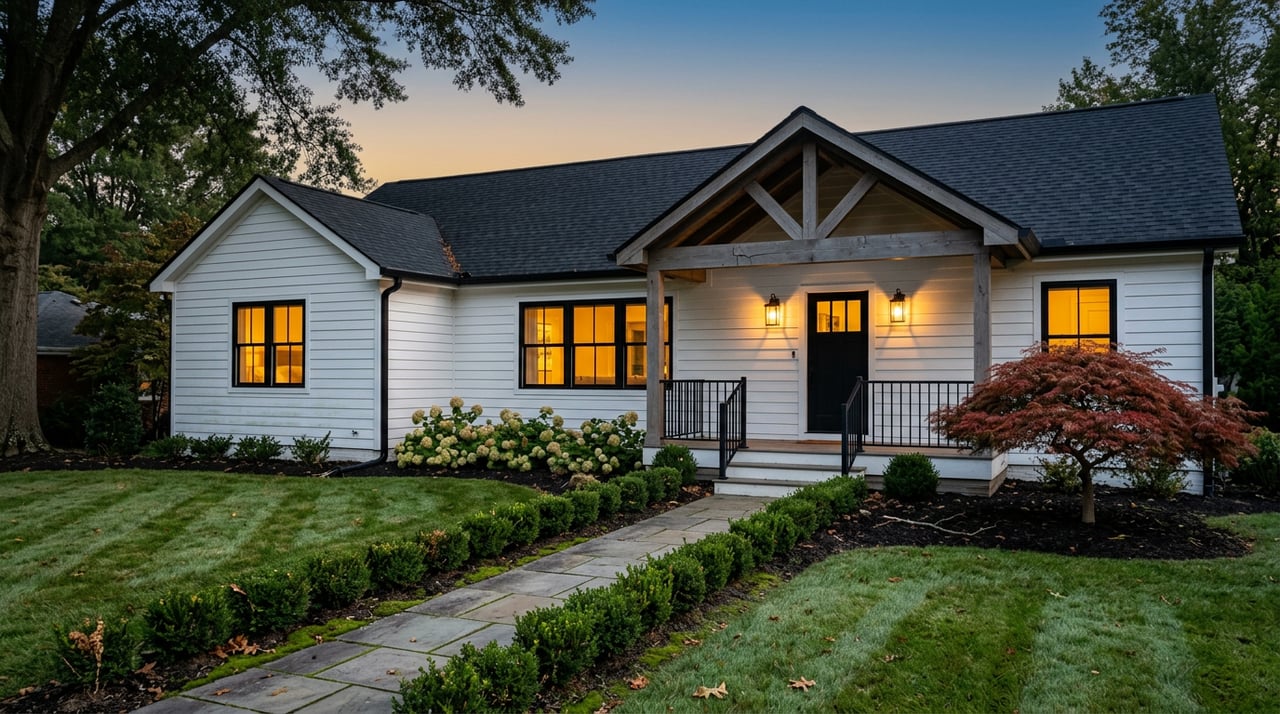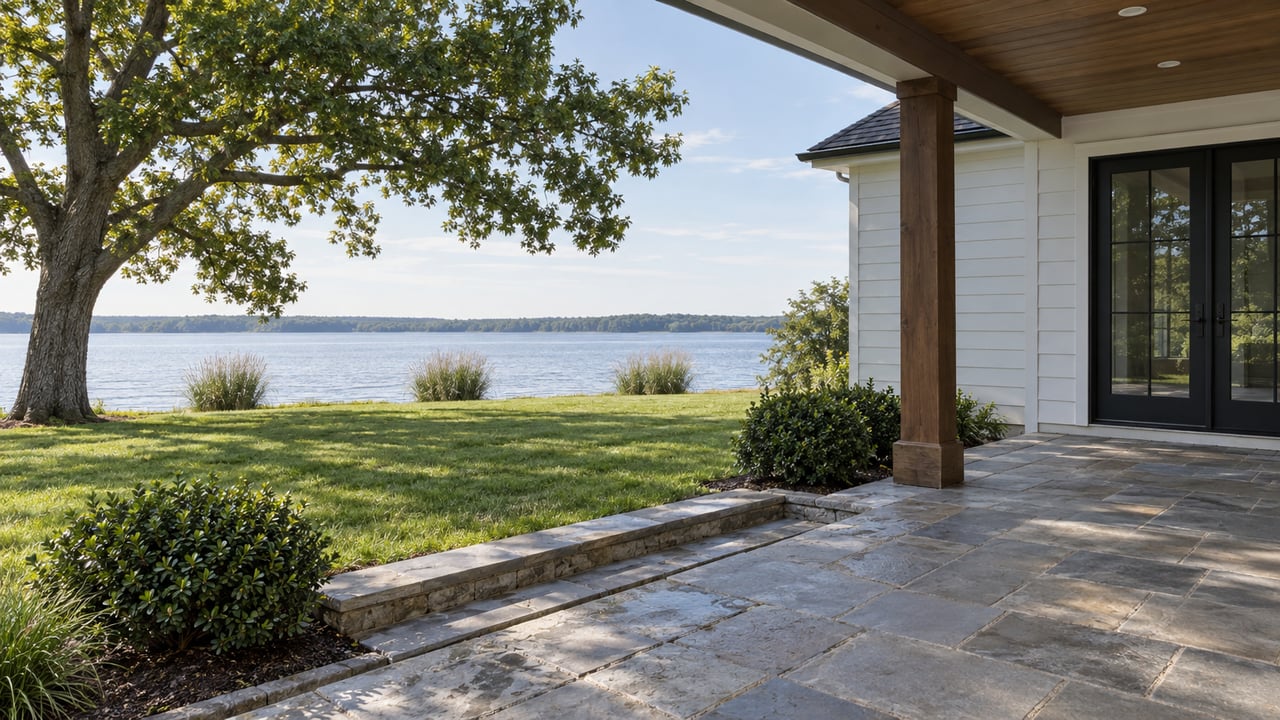
Two houses sit on the same cove off the South River, listed within weeks of each other at nearly identical prices. Same acreage, same water frontage, same style of dock in the listing photos. A buyer comparing them on price per square foot would call it a wash. It isn't, because one lot has roughly 40 feet of usable yard between the house and the water, and the other has almost none, and neither fact shows up anywhere in the listing sheet.
That gap comes from Maryland's Chesapeake Bay Critical Area Law, and it is the single most consequential thing a waterfront buyer in Anne Arundel County can fail to check before writing an offer.
What the Critical Area actually restricts
Anne Arundel County defines the Critical Area as all land within 1,000 feet of mean high tide or the edge of tidal wetlands, along with the waters of the Chesapeake Bay and its tributaries. Inside that zone sits a smaller, stricter band: the Critical Area Buffer, a minimum 100 feet measured landward from the mean high water line of tidal water, tidal wetlands, or a tributary stream.
The buffer is not fixed at 100 feet for every lot. The county's own rules expand it to include any contiguous sensitive area, including all land within 50 feet of the top of a steep slope. A waterfront lot with a bluff, a ravine, or erodible soil near the shoreline can lose considerably more of its buildable footprint than the base rule suggests, and that expansion is determined lot by lot, not disclosed on a listing.
Anything that disturbs soil or vegetation inside the buffer, from grading to tree removal, requires county approval first. The county fields the same question from waterfront owners every week: can I cut a tree under four inches in diameter without a permit? The answer is no. Every tree, shrub, and vine in the Critical Area counts as habitat, and removing any of it, dead or alive, requires an approved Vegetation Management Plan and native replanting afterward. A disturbance larger than 5,000 square feet also triggers a separate grading permit.
A denied variance on Warehouse Creek
The clearest illustration of how seriously this gets enforced came out of Edgewater, on Warehouse Creek. A developer who had purchased two parcels there sought variances to build single-family homes and septic systems inside the 100-foot buffer, along with permission to clear more vegetation than the code otherwise allows. Anne Arundel County's Board of Appeals denied the requests. The case, Critical Area Commission v. Moreland, LLC, worked its way through the Circuit Court and the Court of Special Appeals before reaching Maryland's high court, largely over whether the Board had documented its reasoning thoroughly enough to survive review.
The underlying lesson for a buyer has nothing to do with the appellate procedure and everything to do with the starting position: a hardship claim, even a well-argued one, is not a formality. The applicant bears the burden of proving unique physical conditions on that specific lot, and the county's presumption runs against granting the variance until that burden is met.
The exemption that flips the story
Here is the detail that changes how a waterfront listing should be read. Piers, bulkheads, and other shore erosion protection structures are classified as water-dependent facilities, and Maryland law treats them as a global exception to the buffer rule. They do not require a variance, and they are not counted as impervious surface the way a patio or a garage would be. Anne Arundel County has taken this position in its own court filings, citing its code section on water-dependent structures.
That is why almost every waterfront listing photograph shows a pier with confidence and says almost nothing about what else could be built. The dock was likely never contested. The addition, the pool, or the second dwelling a buyer might picture next to it is a different legal question entirely, one that runs through the variance process rather than around it.
The variance approval rate that changes the math
A 2016 review by the University of Maryland's Environmental Law Clinic looked at how several Chesapeake counties actually rule on Critical Area variance requests. In Anne Arundel County, the vast majority were granted, with an approval rate around 89 percent, similar to Worcester County and just below the 100 percent rates recorded in Queen Anne's and St. Mary's counties. Most of those requests involved fairly ordinary residential asks: additions, decks, patios, garages.
That number should reframe how a buyer thinks about risk here. The buffer is not a wall that keeps most projects out. It functions closer to a toll booth. The real cost isn't rejection, which is uncommon, it's the process itself: a pre-file consultation, a formal application with site plans and a letter of explanation addressing the specific hardship criteria, a scheduled public hearing before the county's Administrative Hearing Officer, and only then a decision. Once a variance is approved, the footprint is locked to the approved drawings, so a change of mind afterward means starting over.
Budgeting three to nine months and real money for surveys, environmental consultation, and legal or design fees before a shovel goes in the ground is part of buying a waterfront lot in this county, whether the project is a new house or a screened porch.
What the price data actually says right now
Countywide, Anne Arundel's average home value stood at $509,641 as of July 2026, up 0.9 percent over the prior year, according to Zillow's index. Waterfront listings specifically don't carry the dramatic premium a buyer might expect from that baseline. Recent inventory on Redfin showed 169 waterfront homes for sale across the county at a median listing price of $545,000, a gap of roughly seven percent over the countywide average rather than the multiple some buyers assume waterfront demands.
That narrow gap is itself worth sitting with. If water access alone drove price the way buyers expect, the median would separate from the countywide number by a wide margin. It doesn't, because the variable that actually moves value within the waterfront segment isn't proximity to the shoreline, it's how much of a given lot sits outside the buffer and can legally hold a structure. Two homes on the same creek, both waterfront, both priced within a few thousand dollars of each other today, can carry very different value five or ten years out depending on whether an owner can eventually add the primary suite, the garage, or the guest cottage the current floor plan lacks.
A countywide average is a starting point, not a verdict, especially for water-privileged parcels in Eastport, Hillsmere Shores, or along the Severn and South Rivers, where the buildable envelope on one lot can look nothing like the lot two doors down.
What to check before an offer goes in
A few steps take the guesswork out of a waterfront contract in this county:
- Confirm exactly where the 100-foot buffer falls on the specific parcel, and whether a steep slope or erodible soil expands it further, before assuming the listed acreage is the usable acreage.
- Ask whether any existing dock, bulkhead, or shore protection was permitted as a water-dependent facility, since that history affects what future work near the shoreline will require.
- If the plan involves an addition, garage, or new structure near the buffer, price in the variance process itself, both the months and the consulting or legal cost, rather than assuming approval is guaranteed just because most requests succeed.
- Confirm current flood zone designation and get an insurance quote early, since waterfront properties in Anne Arundel County span a range of FEMA zones with very different premium levels.
- Remember that Maryland's state transfer tax runs 0.5 percent of the sale price, split between buyer and seller, and Anne Arundel County may add its own transfer tax on top, a detail worth confirming with the title company before closing.
Frequently asked questions
Does the Critical Area only apply to homes directly on the water? No. It extends 1,000 feet landward from tidal water or tidal wetlands, so a property several blocks from the shoreline can still fall inside the Critical Area even if it has no water view at all.
If a dock or bulkhead is already built, will a buyer need to reapply for anything? Generally no. Existing water-dependent facilities carry their own permitting history and don't require a new variance simply because ownership changes. Any expansion or replacement, however, should be checked against current code before assuming the old permit still covers it.
Waterfront property in this county rewards buyers who read the parcel, not just the listing. The Dawn Wilson Group works these transactions from the buffer line to the closing table, and a conversation before you write an offer is the fastest way to know what a specific lot on a specific creek will actually let you build.